Designed scalable 3D and multi-device interactions, simplifying onboarding and maintaining consistent experience across hardware constraints.
Samsung’s VR headset targeted first-time users globally, but the setup process was long and fragmented, and existing 2D mobile UX patterns did not translate directly to immersive experiences.
This project focused on defining foundational interaction principles, optimizing experience across VR headset and mobile devices, and reducing onboarding friction while considering hardware limitations for a consistent, scalable user experience.
This project focused on defining foundational interaction principles, optimizing experience across VR headset and mobile devices, and reducing onboarding friction while considering hardware limitations for a consistent, scalable user experience.
My Role
- Senior UX Designer, individual contributor
- Planned and designed foundational 3D interactions and layout
- Maintained continuity with mobile experiences and aligned with hardware constraints
- Mentored junior designers and collaborated with researchers, PMs, and engineers
- Localized UX for global launch
Key Contributions
- Reduced setup steps from 13 → 5, improving clarity and guidance
- Designed multi-device interaction flows bridging VR and mobile interfaces
- Established reusable 3D interaction patterns adaptable to different devices
- Led design workshops for innovative solutions and validation
Impact
- 7M units sold in first quarter
- 2 international patents filed
- Increased first-time user engagement and retention
- Provided foundation for the team’s transition from 2D to multi-device immersive UX
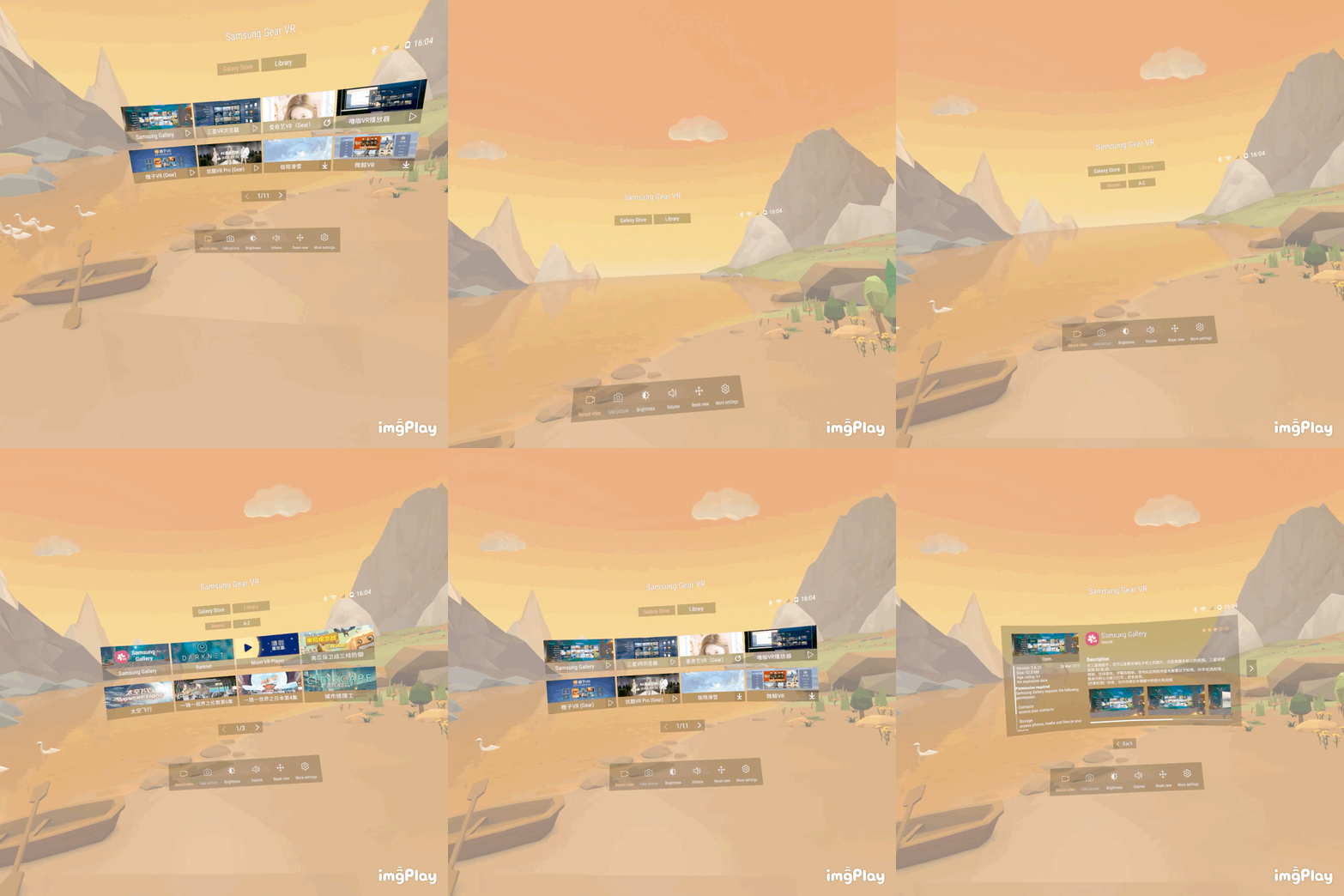
13 → 5 steps : VR + Mobile setup flow
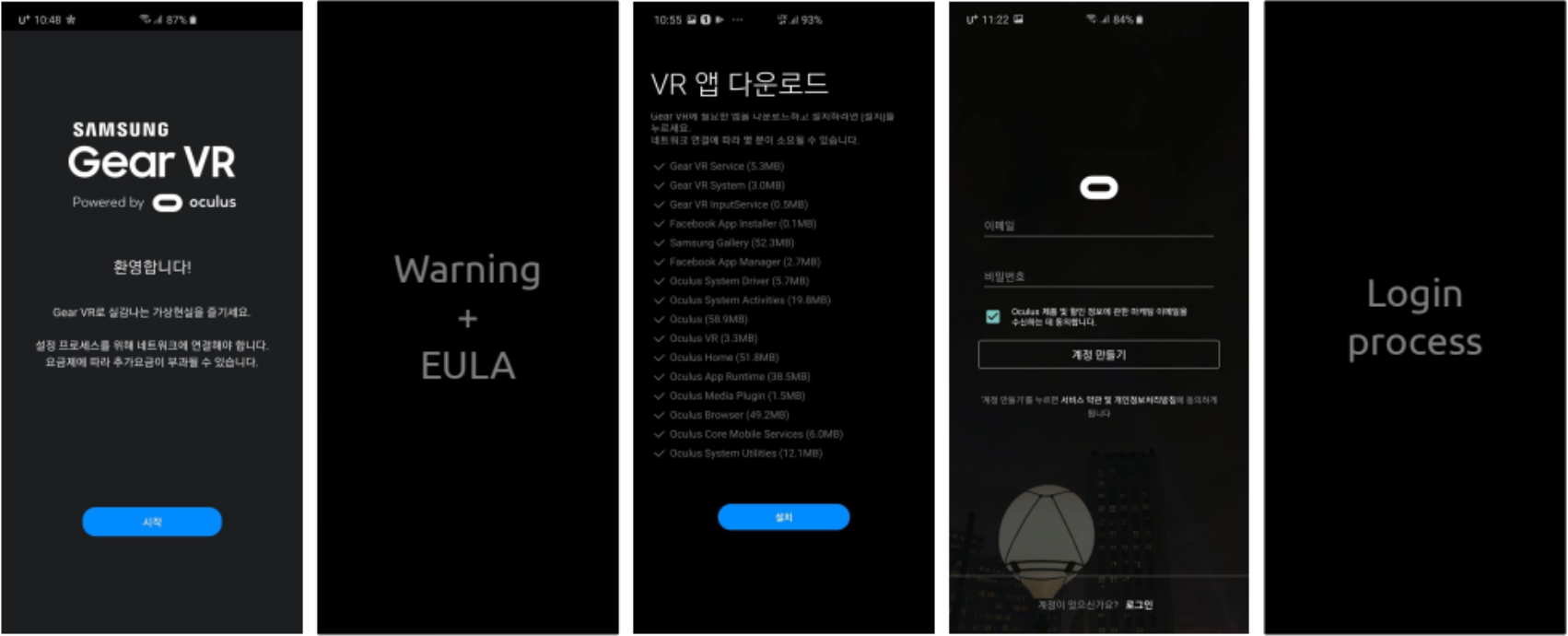
[After] Streamlined multi-device setup with clear guidance across VR and mobile.

[Before] Fragmented setup with unclear transitions between VR headset and mobile.